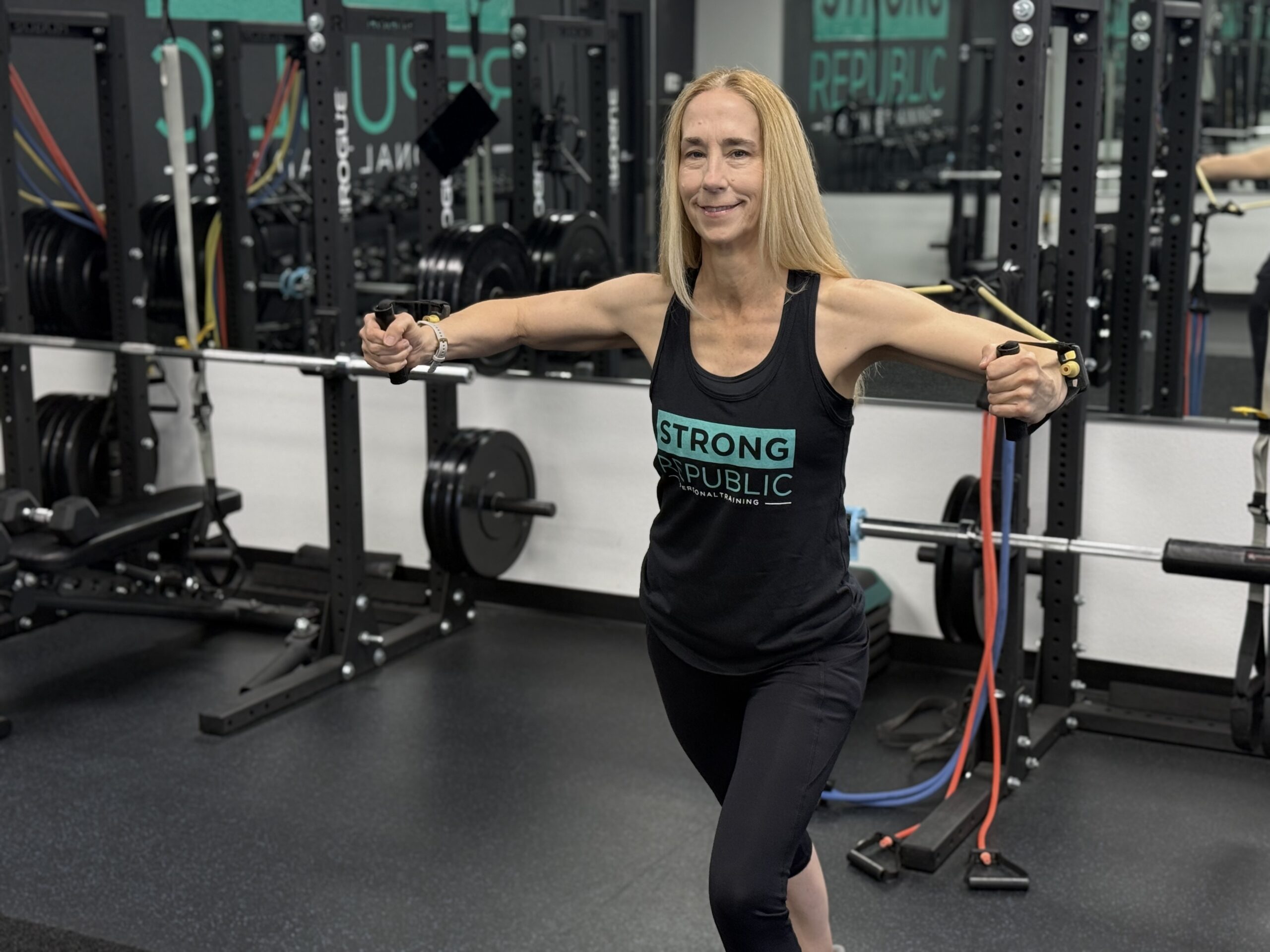
If you're in La Quinta and taking a GLP-1 medication, here's what you need to know. If you're taking Ozempic, Wegovy, Mounjaro, or any other GLP-1 medication for weight loss, you're probably seeing results on the scale. Maybe significant results. These drugs work. That's not the debate anymore. The debate is about what happens to the rest of your body while the number goes down.
Here's the part your prescribing doctor may not have spent much time on: up to 40% of the weight you lose on GLP-1 medications isn't fat. It's muscle. A 2025 case series from Texas Tech University confirmed that lean tissue loss made up 26 to 40% of total weight reduction in patients on semaglutide and tirzepatide. That's not a rounding error. That's a fundamental problem, especially for anyone over 40.
And a peer-reviewed narrative review published in Frontiers in Clinical Diabetes and Healthcare in late 2025 made it clear: combining GLP-1 therapy with structured resistance training and increased protein intake is the most effective way to counteract that muscle loss. The researchers concluded that future obesity management will likely prioritize integrated approaches combining medication with strength training, rather than replacing lifestyle changes with drugs alone.
Why Muscle Loss on GLP-1s Is a Bigger Deal Than You Think
Ready to Get Strong with Us?
14-Day Jump Start from $149 · Personal training from $33/session
Certified trainers specializing in GLP-1 fitness for adults 40+. Serving La Quinta. No contracts.
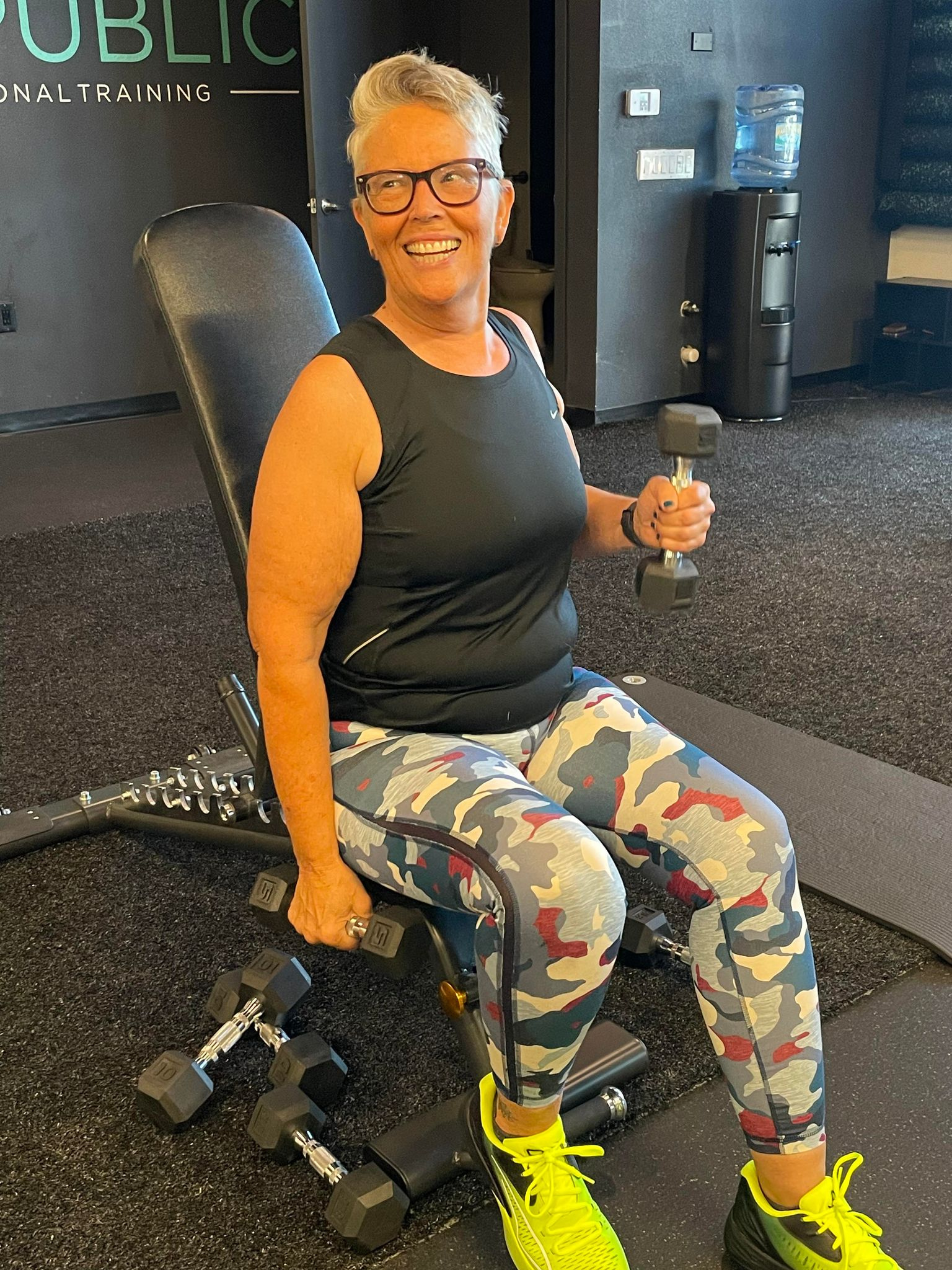
Losing muscle isn't just a cosmetic issue. Skeletal muscle is the engine of your metabolism. It's what keeps your resting metabolic rate up so you burn calories even when you're not exercising. When you lose muscle, your metabolism slows down, which means the moment you stop taking the medication or your dose plateaus, weight regain becomes much more likely.
For adults over 40, the stakes get higher. If you're over 60, read our guide to GLP-1 risks for seniors for the full picture. You're already losing muscle naturally. After 50, most people lose 3 to 5% of their muscle mass per decade. That process is called sarcopenia and it accelerates as you age. If you layer GLP-1 induced muscle loss on top of age-related muscle loss, you're compounding a problem that directly affects your ability to stay mobile, independent, and injury-free.
Dr. Viral Shah, an endocrinologist at Indiana University School of Medicine, told CNN in 2025 that people 65 and older are already at risk for sarcopenia, and losing even 10 to 15% of lean mass while on a GLP-1 is significant because they have less muscle to begin with.
The benefits of strength training after 50 are well documented. But when you add a GLP-1 medication into the picture, strength training goes from important to absolutely essential.
What the Research Says About Exercise and GLP-1s
The American College of Sports Medicine, the World Health Organization, and the European Association for the Study of Obesity all agree on the exercise prescription for people on GLP-1 medications. It's not complicated but most people aren't doing it.
The recommendation is at least 150 minutes per week of moderate aerobic activity, plus resistance training 2 to 3 times per week targeting all major muscle groups. A practical three-step approach published in the Frontiers review suggests starting with regular movement, then incorporating 60 to 90 minutes of weekly resistance training using weights, bands, or bodyweight exercises, then building to 30 to 60 minutes of daily aerobic activity alongside those strength sessions.
The key word in all of this is resistance training. Not walking. Not yoga. Not the elliptical machine. Those are fine for cardiovascular health. But the European Association for the Study of Obesity specifically highlighted that resistance training, not aerobic exercise, is what attenuates lean body mass loss during weight loss. Walking alone will not save your muscle.
The GLP-1 Side Effects That Affect Training
There's something else nobody talks about enough. GLP-1 medications come with side effects that directly affect how you exercise. Nausea, reduced appetite, fatigue, and occasional dizziness are common, especially during dose adjustments. This means your training program needs to be built with those realities in mind.
Shorter sessions are smarter than marathon workouts. Compound movements like squats, deadlifts, and presses give you the most muscle-building stimulus in the least amount of time. And your trainer needs to understand that some days you'll feel great and some days you'll be fighting nausea the whole session. A good program flexes around that without abandoning the progressive overload that drives results.
If you're wondering whether your current routine is enough, read our breakdown of strength training vs cardio on GLP-1s. This is exactly why working with a trainer who understands GLP-1 medications matters more than just showing up at a gym. At Strong Republic, our coaches build programs specifically for adults 40+. If you're in La Quinta, check out our guide to the best personal trainers in La Quinta for adults over 40 who are managing medications, injuries, and the realities of aging bodies. We adjust intensity on the fly without losing sight of the goal.
Protein: The Other Half of the Equation
You can't train your way out of a protein deficit. And GLP-1 medications create a protein problem by suppressing your appetite so dramatically that most people simply don't eat enough. The ACE (American Council on Exercise) published guidelines in 2025 recommending that GLP-1 users consume 1.2 to 2.0 grams of protein per kilogram of body weight per day, depending on training status. For a 160-pound person, that's roughly 87 to 145 grams of protein daily.
When you're eating less overall because the medication is killing your appetite, hitting those numbers requires intentional planning. Every meal needs to lead with protein. Our Strong Elite Nutrition program helps members build eating patterns that support muscle retention even when appetite is suppressed.
What Happens When You Stop the Medication
This is the part that keeps researchers up at night. The Frontiers review was direct about it: stopping GLP-1 therapy alone often leads to weight regain, while exercise helps preserve muscle mass and sustain weight loss long-term. If you lose weight on a GLP-1 without building any muscle or changing your habits, you're essentially renting the results. The moment you stop paying, they leave.
Strength training changes that equation. Muscle is metabolically active tissue. The more you have, the more calories you burn at rest. Building muscle while you're losing fat on a GLP-1 means you're creating a body that can maintain its new weight even after the prescription ends. Women over 50 face additional compounding risks, which we cover in the best exercise program for women over 50 on GLP-1s.
The "Ozempic Body" Problem
There's a reason the term "Ozempic face" went viral. When you lose weight rapidly without resistance training, you lose fat and muscle in roughly equal proportions from everywhere, including your face, arms, and places you actually wanted to keep full. The result is a thinner but deflated, saggy appearance that doesn't match what most people envisioned when they started the medication.
Resistance training changes the composition of what you're losing. By sending a clear signal to your body that it needs its muscle, you shift the ratio toward losing primarily fat. The result is a leaner, more defined, more functional body rather than just a smaller version of your old one. This is why strength training matters so much after 40, and it matters even more when you add a GLP-1 to the picture. People who combine GLP-1 medications with structured strength training consistently report being happier with how they look and feel compared to those who relied on the medication alone.
GLP-1s and Joint Health in the Desert
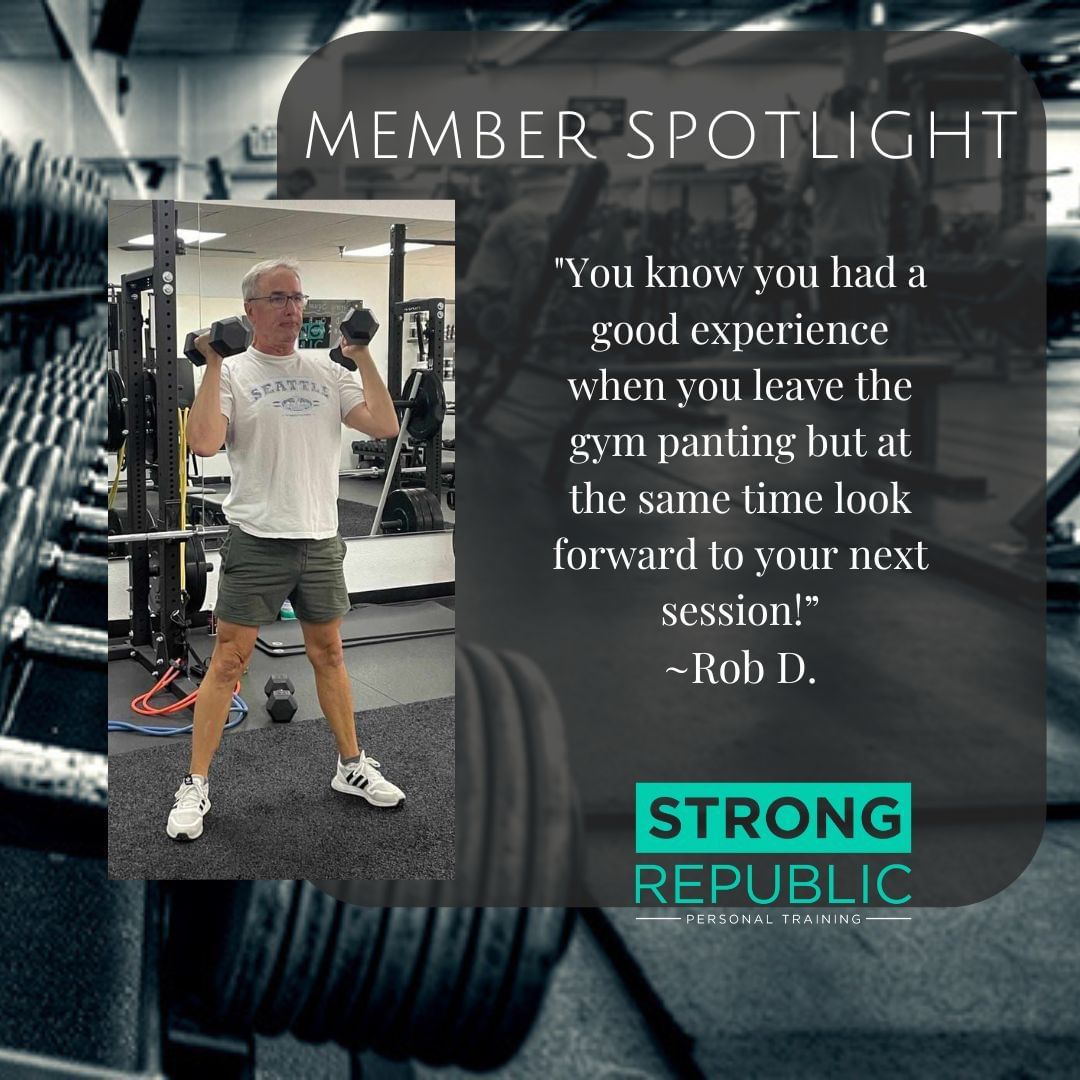
Here's something specific to the Coachella Valley. A lot of our members are active. Golf four days a week. Pickleball every morning. Hiking in the canyons. These activities put real demand on your joints, and joints depend on the muscles around them for stability and shock absorption. When GLP-1 medications strip away muscle, your joints lose their support system. We've seen members come in with new knee pain, shoulder issues, and back problems that started right around the time they began losing muscle mass on their medication.
Strengthening the muscles around your joints doesn't just preserve function, it actively protects against the kind of overuse injuries that sideline active people. Stretch therapy combined with targeted strength work keeps the whole system working together. For golfers specifically, our golf fitness program addresses the rotational demands of the sport while protecting the spine and shoulders that muscle loss leaves vulnerable.
This is the part that keeps researchers up at night. The Frontiers review was direct about it: stopping GLP-1 therapy alone often leads to weight regain, while exercise helps preserve muscle mass and sustain weight loss long-term. If you lose weight on a GLP-1 without building any muscle or changing your habits, you're essentially renting the results. The moment you stop paying, they leave.
Strength training changes that equation. Muscle is metabolically active tissue. The more you have, the more calories you burn at rest. Building muscle while you're losing fat on a GLP-1 means you're creating a body that can maintain its new weight even after the prescription ends. Women over 50 face additional compounding risks, which we cover in the best exercise program for women over 50 on GLP-1s.
GLP-1 Fitness Support in La Quinta: How We Help
Our La Quinta studio was built exclusively for adults over 40. That means every trainer on our team understands the specific challenges of training while on appetite-suppressing medications — lower energy, reduced protein intake, and the urgent need to protect muscle mass. We don't run cookie-cutter programs here. We build around your medication schedule, your protein targets, and your starting point.
We serve men and women from La Quinta, Indian Wells, Bermuda Dunes, and the east valley. Whether you just started on Ozempic or you've been on it for a year and are only now realizing the muscle loss is real, we know exactly where to start. Call (760) 509-1993 or fill out the form below.
What This Looks Like in Practice
At Strong Republic, we train adults 40+ at three locations in the Coachella Valley: Palm Desert at 77780 Country Club Dr., La Quinta at 78802 Highway 111, and Palm Springs at 4741 E. Palm Canyon Suite E. Semi-private sessions with 3 to 6 people, starting at $33 per session. See our guide to the best trainers in La Quinta or the best senior fitness programs in Palm Desert and La Quinta.
If you're on a GLP-1 and you're not strength training, you're losing muscle you can't afford to lose. The research is unambiguous about this. Our 14-Day Jump Start gives you 4 sessions for $149 or 6 for $199. No contract. Come in, train, and see how your body responds when you pair real strength work with your medication.
Read what our members say. Or check out our senior fitness programs in Palm Desert and La Quinta and strength training for women over 50 and the best gyms for women in the Coachella Valley to see how we work with different populations. Women can also explore the best gyms for women in the Coachella Valley and our strength training for women over 50 guide. Call (760) 766-0934 for Palm Desert, (760) 509-1993 for La Quinta, or (760) 388-2638 for Palm Springs.