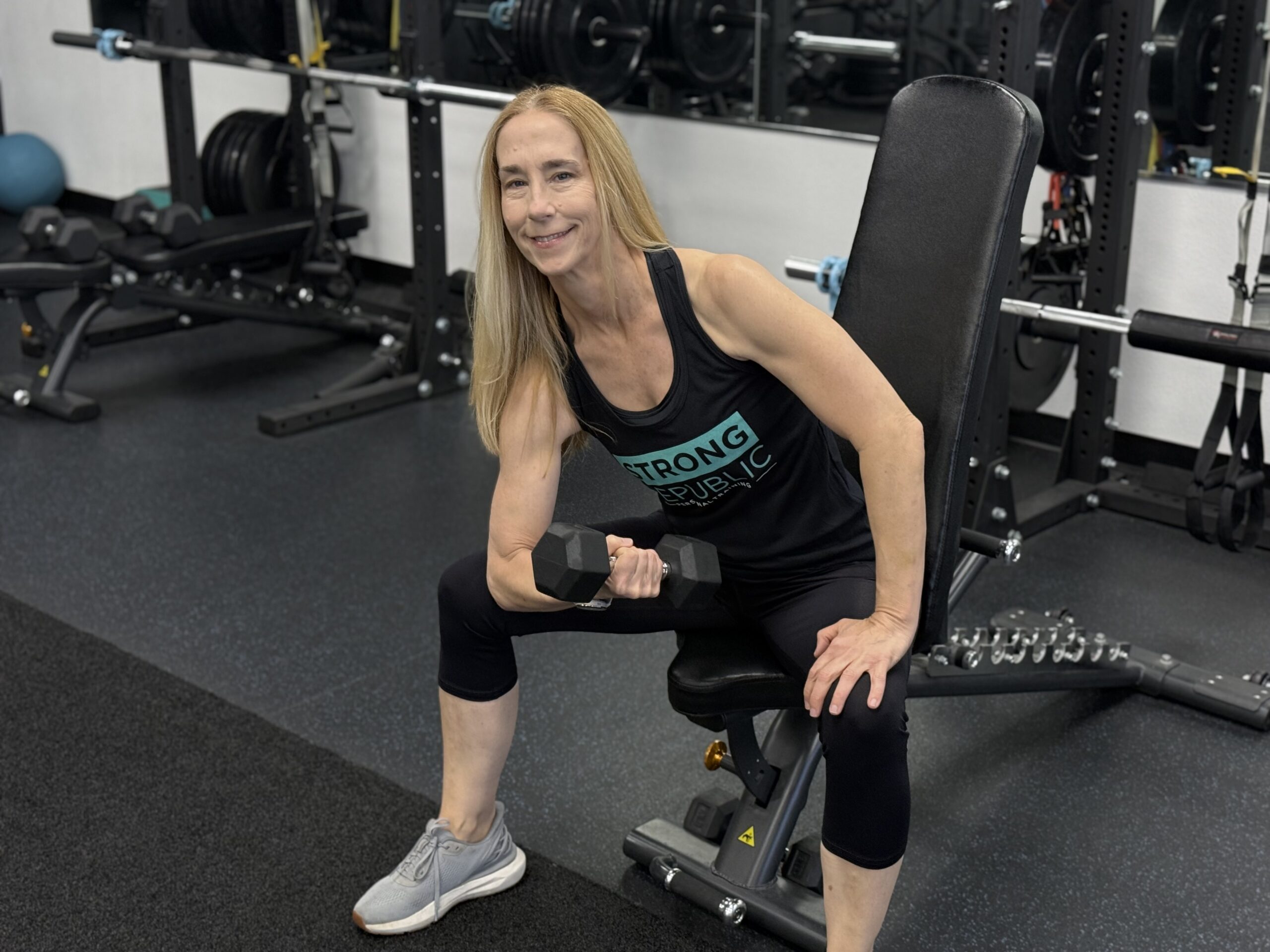
Here's something that doesn't get talked about enough. After 50, your body starts quietly working against you. Muscle disappears. Bones thin out. Your metabolism, the thing that used to forgive a weekend of bad eating, just... stops cooperating. And most of the fitness advice out there was written for 25-year-olds. If you're a woman over 50 in La Quinta, this guide is for you.
The research on this is pretty staggering. Women lose somewhere between 3% and 8% of their muscle mass every decade after 50. Bone density takes a nosedive around menopause. And if you're on a GLP-1 medication like Ozempic or Mounjaro, the muscle and bone loss accelerates even further. Read the best exercise program for women over 50 on GLP-1 medications for the full picture. Joints get cranky. And the frustrating part? Cardio alone won't fix any of it. Walking is great for your heart, but it does almost nothing to rebuild what you're losing. If you're taking a GLP-1 medication, this gap is even more dangerous. Our breakdown of strength training vs cardio on GLP-1s explains why. This is why strength training matters after 40.
The good news? Every single one of these things responds to one type of exercise. Not cardio. Not yoga (though yoga is fine, it's just not enough). Strength training for women over 50 is the most effective tool science has found to slow down, stop, and actually reverse what's happening. And it doesn't matter if you've never picked up a dumbbell in your life. For more on this topic, read about weight training vs cardio for women over 50.
Why Strength Training Matters More After 50
Ready to Get Strong with Us?
14-Day Jump Start from $149 · Personal training from $33/session
Certified trainers specializing in women 40+. Serving La Quinta. No contracts.
So what exactly happens to a woman's body after 50, and why does lifting weights fix it? Let's break it down, because understanding the "why" makes the "what to do" a lot easier to commit to.
Muscle Loss (Sarcopenia)
This is the one that sneaks up on people. You don't wake up one morning and notice your muscles are gone. It happens gradually over years. Starting around your 30s, you lose a little muscle every year. By 50, the rate picks up. And because muscle is the tissue that keeps your metabolism humming along, less of it means your body burns fewer calories just existing. That's why so many women over 50 gain weight without changing how they eat. The math just shifted underneath them. Here's the thing though: strength training is the only type of exercise that actually builds new muscle. Walking is wonderful for your heart. Yoga is great for flexibility. But neither one sends the signal your body needs to grow muscle tissue. Only resistance training does that.
Bone Density Loss (Osteoporosis)
This is the scary stat: women can lose up to 20% of their bone density in the five to seven years right after menopause. More than half of women over 50 have either osteoporosis or its precursor, osteopenia. And most of them don't know until they break something. Strength training is one of the only activities proven to actually increase bone density, not just slow the decline. Here's why it works. When your muscles contract hard against resistance, they pull on the bones they're attached to. That mechanical stress triggers the bone to lay down new tissue and get denser. Every major medical organization recommends weight-bearing exercise for bone health. For women over 60 on GLP-1 medications, this is especially critical. See GLP-1 risks for seniors over 60. This is what they're talking about.
Menopause & Perimenopause Symptoms
Hot flashes. Broken sleep. Mood swings that come out of nowhere. Brain fog so thick you can't remember why you walked into the kitchen. And then there's the belly fat that just... appears. If you're going through perimenopause or menopause right now, you already know the list. What you might not know is that regular strength training actually reduces the severity of a lot of these symptoms. It helps you sleep deeper. The endorphin release stabilizes your mood in a way that feels natural, not forced. It burns off that stubborn visceral fat around the midsection. Some research even suggests it helps with the cognitive fog. If this is where you're at right now, personal training designed for women that includes progressive strength work isn't just a nice idea. It might be the best thing you do for yourself this year. And if you're currently on Ozempic, Wegovy, or Mounjaro, read why strength training isn't optional on GLP-1 medications. Our complete guide to menopause exercises digs deeper into what works and what doesn't.
Metabolism & Weight Management
OK, let's talk about the metabolism piece because this is where it clicks for a lot of women. A pound of muscle burns roughly 6 to 10 calories a day just sitting there. Doesn't sound impressive until you do the math. Build 10 pounds of lean muscle and you're burning an extra 60 to 100 calories a day without changing anything else about your life. Over a year, that adds up to 7 to 10 pounds of fat loss from your resting metabolism alone. Now think about the reverse. Most women over 50 have slowly lost muscle over the past two decades and replaced it with fat tissue, which burns almost nothing. So their metabolism has been quietly dropping for years. Strength training flips that equation back in your favor.
Joint Health & Pain Reduction
There's a misconception that won't die: "lifting weights is bad for your joints." The opposite is true. Strong muscles act like built-in shock absorbers for your joints. They take pressure off the cartilage and connective tissue that's been doing all the work. Women over 50 who train consistently almost always report less knee pain, less back pain, and better mobility than before they started. We see this at our studios every single week. And if joint pain is currently stopping you from being active, that's actually a reason to work with a qualified personal trainer, not a reason to sit on the couch. The right program works around your pain while gradually building the strength that reduces it.
Muscle mass lost per decade after 50 without strength training. The good news? It's reversible at any age.
Can We Talk About the "Bulky" Thing?
We hear this constantly. "I don't want to get bulky." So let's just deal with it head on.
Women have about 15 to 20 times less testosterone than men. Testosterone is the hormone that drives big muscle growth. Without it, building huge muscles is basically impossible unless you're training like a professional bodybuilder for years, following extremely specific nutrition plans, and in many cases supplementing on top of all that. It's just not going to happen by accident from picking up dumbbells three times a week.
What actually happens when women strength train? You get leaner. More defined. Your posture improves, which makes you look taller and more put together. Clothes fit better. You look and feel athletic. Not bulky. Strong.
Those women in fitness magazines who look huge? That was their full-time job for years. A normal strength training program will give you the toned, capable body you're picturing when you think "I want to get in shape."
Want Expert Guidance? Talk to a Trainer
Our certified trainers specialize in strength training for women over 50. Get a custom program designed for your body, your goals, and your pace.
Request Your Free Consultation →Best Strength Training Exercises for Women Over 50
You don't need complicated machines or a bodybuilder's routine. The exercises that work best for women over 50 are compound movements, which just means they use multiple muscle groups at the same time and mimic things you actually do in real life. Picking things up. Pushing. Pulling. Carrying. That kind of functional strength is what keeps you independent and capable for decades.
1. Goblet Squats
Why: Builds lower body strength, improves bone density in hips and spine, strengthens the core, and improves balance. The goblet position (holding a weight at chest height) keeps the spine upright and is easier on the lower back than barbell squats.
Start with: Bodyweight squats, then progress to holding a dumbbell or kettlebell at your chest. Aim for 3 sets of 10-12 reps.
2. Deadlifts (Dumbbell or Kettlebell)
Why: The single best exercise for your posterior chain - glutes, hamstrings, and lower back. Deadlifts build the strength you need to pick things up safely, improve posture, and are one of the most effective bone density exercises for the hips and spine.
Start with: Romanian deadlifts with light dumbbells, focusing on hinging at the hips with a flat back. 3 sets of 10 reps.
3. Rows (Dumbbell or TRX)
Why: Strengthens the upper back and counteracts the rounded posture that comes from sitting, driving, and looking at phones. Strong back muscles improve posture dramatically - which is one of the fastest visible changes women notice from strength training.
Start with: Single-arm dumbbell rows or TRX rows. 3 sets of 10-12 per side.
4. Push-Ups (Modified or Full)
Why: Builds chest, shoulder, and tricep strength while engaging the core. Push-ups also load the wrists and arms, which helps maintain bone density in the upper body - important for fall prevention.
Start with: Incline push-ups against a bench or wall, then progress to knee push-ups, then full push-ups. 3 sets of 8-12.
5. Farmer's Carries
Why: One of the most underrated exercises. Carrying heavy weights while walking strengthens grip, core, shoulders, and the entire posterior chain. It directly translates to carrying groceries, luggage, and grandkids - real-life functional strength.
Start with: Hold a dumbbell or kettlebell in each hand and walk 30-40 yards. Repeat 3-4 times.
6. Glute Bridges / Hip Thrusts
Why: Activates and strengthens the glutes - the largest muscle group in your body. Strong glutes support the lower back, stabilize the hips, and improve everything from walking to climbing stairs. Glute weakness is one of the most common causes of lower back and knee pain in women over 50.
Start with: Bodyweight glute bridges, then progress to weighted hip thrusts. 3 sets of 12-15.
How Often Should Women Over 50 Strength Train?
Three times a week is the sweet spot for most women. That gives you enough frequency to see real changes while leaving room for your body to recover, which honestly matters more after 50 than it did at 30.
Can you get results with two sessions a week? Yes. The research is clear that hitting each muscle group twice a week produces significantly better results than once. So twice a week is your floor.
Four sessions a week works well if you want to mix strength and cardio. A lot of our members at Strong Republic do 2 to 3 semi-private training sessions per week and get both in without spending their whole life at the gym.
One more thing. Recovery is not optional at this stage. Your muscles still grow and adapt beautifully, they just need a bit more downtime between hard sessions. Sleep, good nutrition, and stretch therapy aren't extras. They're part of the program. Find the best gym for women in La Quinta, Palm Desert, or Palm Springs.
Not Sure Where to Start? We'll Build Your Plan
Every woman's body is different at 50+. Our trainers create a program matched to your fitness level, injuries, and goals - no cookie-cutter workouts.
Get Your Custom Plan →How to Get Started Safely
First things first: get a real trainer. This is not the time for YouTube workouts or guessing. A certified personal trainer who actually understands the female body after 50 will assess how you move, spot your limitations, and build a program that makes you stronger without putting you at risk. Our trainers at Strong Republic have 15+ years of experience working exclusively with adults 40+. They've seen everything.
Start lighter than your ego wants you to. Seriously. Spend the first 2 to 4 weeks learning proper form with weights that feel almost too easy. Good technique prevents injuries and actually activates your muscles better than heaving heavy weights around with sloppy form. You'll progress faster by starting slow.
Then focus on progressive overload. Fancy term, simple concept. Each week, make it a tiny bit harder. Add a little weight. Do one extra rep. Slow the movement down. These small, boring, consistent increases are what produce dramatic results over months. Nobody gets strong from one heroic workout. They get strong from showing up and doing a little more each time.
Don't ignore nutrition. Your training creates the stimulus for muscle growth, but protein is the raw material your body uses to actually build it. Women over 50 should be eating somewhere around 0.7 to 1.0 grams of protein per pound of body weight daily. If that sounds like a lot, it probably is more than you're getting now. Our Strong Elite Nutrition program helps with this specifically.
And finally, patience. You'll feel stronger in 2 to 3 weeks. You'll start seeing visible changes around week 4 to 6. The real transformations happen at 8 to 12 weeks. The women who get the best results aren't the hardest workers. They're the most consistent ones.
What Results Can Women Over 50 Expect?
The first couple weeks feel different more than they look different. You notice you're stronger. Things that were hard get easier. A lot of women tell us their sleep improves almost immediately, which they weren't expecting.
By weeks 3 and 4, other people start to notice. Your clothes fit differently. Your posture changes visibly. Someone will say "you look different" and you'll realize they're right.
Weeks 6 through 8 is when you start seeing actual muscle definition. Here's where it gets interesting: the scale might barely move, but the mirror tells a completely different story. Muscle is denser than fat, so you can be the same weight but look dramatically different.
At the 8 to 12 week mark, that's where real transformations happen. We've watched women in their 50s at Strong Republic drop multiple clothing sizes, build visible strength they haven't had in decades, and walk into the studio like a different person than the one who nervously showed up three months ago.
And unlike crash diets or extreme cardio programs that give you temporary results and then leave you worse off, the strength you build sticks around. It's a foundation, not a quick fix.
Women's Strength Training in La Quinta, CA
La Quinta is home to thousands of women over 50 who want to stay strong, independent, and active for decades to come. Whether you spend winters here or live year-round, the challenge is finding a fitness program built around how a woman's body actually works after 50 — not a generic gym routine designed for someone half your age.
Our La Quinta studio on Highway 111 serves women from La Quinta, Indian Wells, Bermuda Dunes, and the surrounding communities. Every trainer on our team understands the hormonal changes of menopause, the bone density concerns that come with age, and how to build programs that deliver real results without beating up your joints. Small groups of six max. Your trainer knows your name and your history on day one. Call (760) 508-1993 or fill out the form below.
Why Semi-Private Training Works Best for Women Over 50
We've tried every format over the years. Big group classes. One-on-one sessions. And what we've found is that for most women over 50, semi-private training hits the perfect balance. You get a trainer who knows your name, your bad knee, your goals, and exactly when to push you harder or pull back. But you're also training alongside a small group of people who get it. They're your age. They have similar challenges. They hold you accountable on the days you'd rather stay home. And at around $33 per session, it's a fraction of what one-on-one training costs.
At Strong Republic, our groups are 3 to 6 people. Small enough to be personal. Big enough to have energy. It's personal training quality with a community built in, and it's a big part of why we're the only studio in the Coachella Valley that works exclusively with adults 40+. We have studios in Palm Desert, La Quinta, and Palm Springs. Our 14-Day Jump Start is the easiest way to try it: 4 sessions for $149 or 6 for $199, no contracts. You can also check out our stretch therapy sessions or read what our members say about their results.
Ready To Get Strong?
Personal training from just $33/session
Fill out the form below and we'll contact you within 24 hours to schedule your free consultation
"I started at Strong Republic at 54 thinking I was too old to get fit. Within 3 months I lost 18 pounds, gained real muscle definition, and have more energy than I did in my 30s. The trainers understand women's bodies after 50."
Frequently Asked Questions
Is it too late to start strength training at 50?
Not even close. Research consistently shows that women can build significant muscle mass and strength well into their 50s, 60s, and beyond. Many women at Strong Republic start in their 50s and achieve the best fitness of their lives. Read more about why strength training matters after 50.
How often should a woman over 50 do strength training?
2-4 sessions per week with rest days between working the same muscle groups. We recommend starting with 3 sessions per week for best results.
Will strength training make me bulky?
No. Women produce far less testosterone than men, making it physiologically very difficult to develop large muscles. Strength training creates a lean, toned, strong physique. For comparison, see strength training for men over 40 - even men have to work hard to build significant mass.
What are the best exercises for women over 50?
Compound movements like squats, deadlifts, rows, presses, and carries. These build real-world functional strength and stimulate bone density - the most important exercises for long-term health.
Does strength training help with menopause symptoms?
Yes. Regular strength training reduces hot flashes, improves sleep, stabilizes mood, reduces belly fat accumulation, and directly combats the bone density loss and muscle decline that accelerate during menopause. If weight loss is a goal, see our weight loss for women over 50 guide, plus local resources for La Quinta and Palm Springs and Palm Desert.