There's a moment that happens for most people somewhere in their 40s. You bend down to pick something up and your back says no. You try to keep up on a hike and you're gassed after ten minutes. You look in the mirror and realize the body that used to just work is starting to work against you.
Here's what most people do at that point: they start walking more, maybe try a yoga class, or dust off that old gym membership and wander around the machines feeling lost. None of those are bad ideas. But none of them address the core problem either. Many people make common fitness mistakes after 40 that keep them from seeing results.
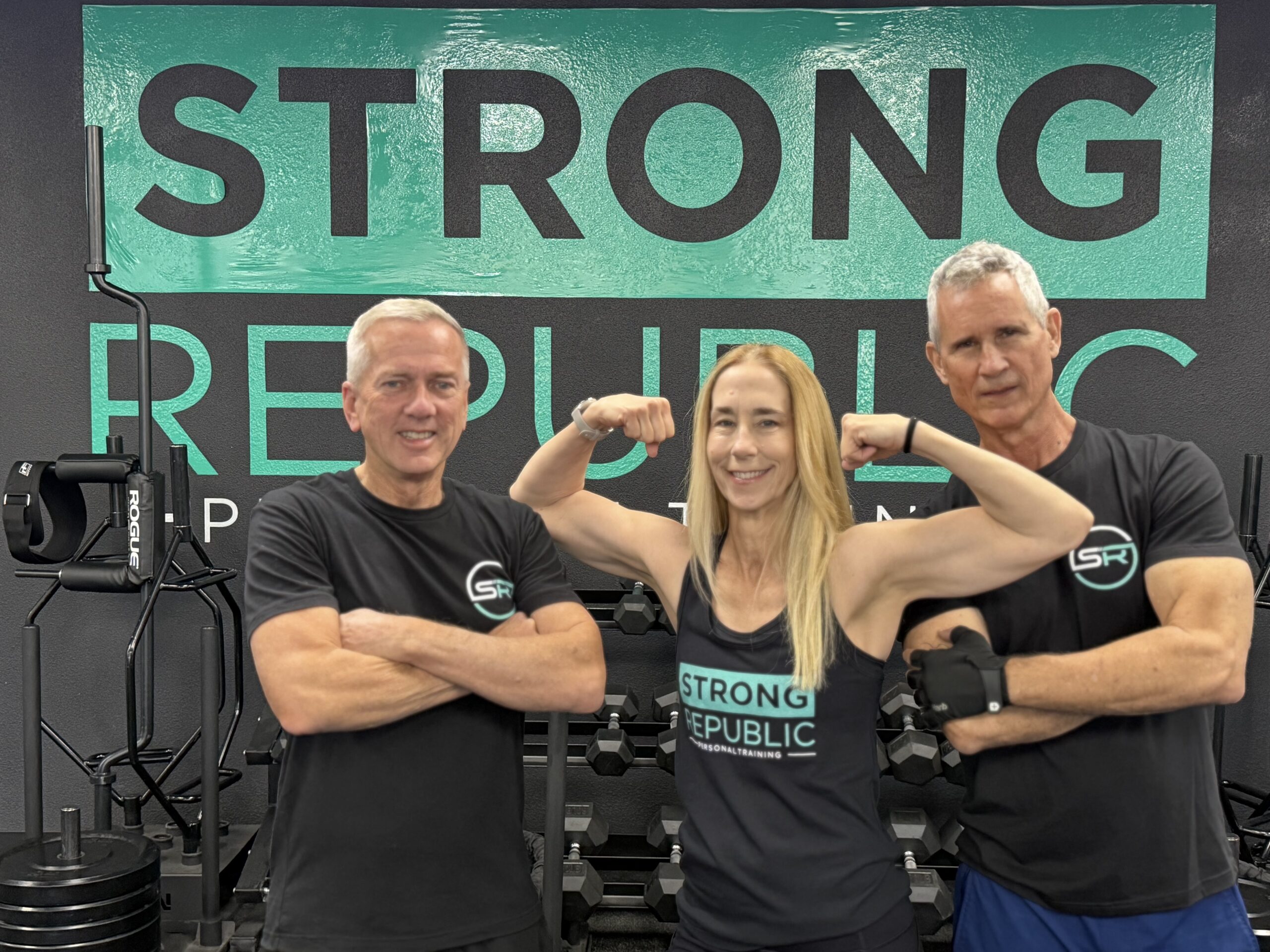
At Strong Republic, we train adults over 40 exclusively across our Palm Desert, La Quinta, and Palm Springs locations. After years of working with this population, we've narrowed it down to 10 exercises that produce the most results for the least risk. They're not trendy. They're not complicated. But they work.
What's Actually Changing in Your Body After 40
Your muscle mass is declining at 3 to 8 percent per decade. That might not sound like much until you realize it's the reason your metabolism has slowed, your balance feels shakier, and simple tasks like carrying luggage feel harder than they should. Bone density is dropping too, especially for women approaching or past menopause. Recovery from workouts takes longer than it did at 30. And your balance, flexibility, and joint mobility are all quietly deteriorating unless you actively train them. Our Palm Springs training programs address all of these issues.
The good news is that every single one of these changes responds to strength training. The right exercises, performed consistently with good form, can reverse years of decline. Not just slow it down. Actually reverse it.
The 10 Exercises That Matter Most
Goblet Squats
If you could only do one exercise for the rest of your life, this might be it. The squat strengthens your legs, glutes, and core while improving mobility and balance. Hold a dumbbell or kettlebell at chest height, stand shoulder-width apart, and sit your hips back and down like you're lowering into a chair. Keep your chest up and drive through your heels to stand. This is the movement that keeps you getting out of chairs, climbing stairs, and playing with grandkids without needing help. If you're brand new to squatting, bodyweight is perfectly fine to start. Our personal trainers can help you dial in proper form before you add any weight.
Romanian Deadlifts
Your posterior chain, that's the back, glutes, and hamstrings, is what keeps you standing upright and protects your spine. Romanian deadlifts build all of it. With dumbbells or a kettlebell, hinge at your hips while keeping your back flat and core braced. Push your hips back, lower the weight along your thighs, then drive your hips forward to stand. This is the exercise that teaches your body how to pick things up safely. Most people who say they have a "bad back" actually have weak posterior chain muscles, and this movement fixes that over time. Men especially benefit from this - see our guide on strength training for men over 40.
Push-Ups
No equipment needed. Push-ups build your chest, shoulders, and triceps while forcing your core to stabilize your entire body. Start against a wall if you need to. Progress to a bench or counter. Then knees. Then full push-ups from your toes. The progression doesn't matter as long as you're doing them consistently and with control. What makes push-ups especially valuable after 40 is that they load your wrists and arms, which helps maintain bone density in your upper body. They also directly train the pushing strength you use every day opening doors, getting up from the floor, and pushing grocery carts.
Rows
Most adults over 40 have a posture problem. Years of sitting at desks, driving, and looking at phones has pulled their shoulders forward and weakened their upper back. Rows fix this. Bend at the hips with a flat back, pull dumbbells toward your ribcage, and squeeze your shoulder blades together at the top. Single-arm dumbbell rows are great because they also challenge your core to resist rotation. The posture improvement from consistent rowing is one of the fastest visible changes people notice. You stand taller. Your shoulders stop aching. And it happens faster than you'd expect. The best trainers in La Quinta can show you proper form.
Lunges
Lunges train single-leg strength, which is what you actually use when walking, climbing stairs, and catching yourself if you trip. Step forward or backward, lower your back knee toward the ground, and push through your front heel to return. Reverse lunges tend to be easier on the knees than forward lunges, so start there if you have any knee sensitivity. The balance component is a huge bonus. Falls are the leading cause of injury in adults over 65, and building single-leg strength now is the best insurance policy against that future risk. If balance is a particular concern for you, our senior fitness programs include extensive balance work alongside strength training.
Want Help With These Exercises?
Personal training from just $33/session
Fill out the form and we'll build a program around your body, your goals, and your pace
Planks
Core strength isn't about visible abs. It's about having a stable center that protects your spine during every movement you make. Hold a position on your forearms and toes (or knees) with your body in a straight line and your core braced tight. Start with 20 seconds and build from there. If you can hold a solid plank for 60 seconds with perfect form, your core is in good shape. The key word there is "perfect." A sagging plank with drooping hips does nothing useful. Twenty seconds of tension with a straight body beats sixty seconds of sloppy form every single time.
Step-Ups
Step onto a box or sturdy bench with one foot and drive through that heel to lift your whole body up. Step back down with control. This mimics stair climbing, which is one of the most functional movements in daily life and also one that gets harder with age if you don't train it. Step-ups build strength in the stabilizer muscles around your knees, which matters a lot for preventing knee pain and improving confidence on uneven ground. Start low, add height as you get stronger, and hold dumbbells at your sides once bodyweight feels easy. If you're in the east valley, see our guide on starting fitness after 40 in Indio.
Pallof Press
This one doesn't look like much, but it's sneaky hard. Stand sideways to a cable machine or resistance band anchor. Hold the handle at chest height and press it straight out in front of you, resisting the pull that wants to rotate your torso. Hold for a couple of seconds, then bring it back in. This trains your core's ability to resist rotation, which is critical for anyone who plays golf or tennis in the Coachella Valley. It also protects your spine during everyday movements like reaching for something while twisting. One of the most underused exercises for adults over 40, and one of the most effective.
Face Pulls
Using a cable or resistance band at face height, pull the handles toward your face while squeezing your shoulder blades back and together. This targets your rear deltoids and the muscles between your shoulder blades, which are chronically weak in most adults. It's the best corrective exercise for rounded "desk posture" and one of the most reliable ways to reduce shoulder pain. If your shoulders bother you during pressing movements, adding face pulls to your routine often resolves the issue within a few weeks. Simple, effective, and almost nobody does them.
Farmer's Carries
Pick up heavy dumbbells or kettlebells, one in each hand, and walk. That's the whole exercise. Walk for 30 to 60 seconds with your shoulders back, core tight, and posture tall. It sounds simple but it builds grip strength, core stability, shoulder strength, and total-body conditioning all at once. It also directly translates to carrying groceries, luggage, and anything else you need to move through daily life. Here's something interesting: research on grip strength and mortality is pretty striking. Stronger grip independently predicts longer life, even after controlling for other health factors.
How to Put These Together
You don't need to do all 10 exercises in every session. A smart approach is to split them across 3 training days per week. One day focused on lower body with goblet squats, Romanian deadlifts, lunges, and farmer's carries. One day focused on upper body with push-ups, rows, face pulls, and planks. And one full-body day mixing step-ups, Pallof press, and rows. A fourth day of light mobility work, walking, or stretch therapy rounds out the week nicely without overloading your recovery.
Start with 2 to 3 sets of 8 to 12 reps for each exercise. Focus on nailing the form before you even think about adding weight. Quality always beats quantity after 40. A perfectly executed squat with 15 pounds produces better results than a sloppy squat with 50. You can always add weight later. You can't undo an injury. A private gym gives you the coaching to get form right from day one.
If you're not sure about your form or don't know where to start, that's exactly what our 14-Day Jump Start is designed for. You get 4 to 6 sessions with a trainer who will teach you every movement, assess where you're starting from, and build a program around your specific body. It's $149 for 4 sessions or $199 for 6. No contract, no long-term commitment.
Why Having a Trainer Changes Everything
You can absolutely do these exercises on your own. But there's a reason most people who try don't stick with it longer than a few weeks. They're not sure if their form is right. They don't know when to progress. They skip the hard exercises and gravitate toward the easy ones. And nobody is holding them accountable on the days they'd rather stay home. Read more about why strength training matters after 50.
At Strong Republic, our semi-private training model means you get a trainer who watches your form on every rep, customizes exercises to your body and its quirks, and progressively challenges you in a way that produces real results without putting you at risk. You also train alongside a small group of people your age, which adds energy, accountability, and a social element that makes showing up something you actually look forward to. Our members consistently say that's one of the biggest reasons they stick with it long-term.
The bottom line is simple. These 10 exercises, done consistently with good form, will make you stronger, more balanced, more resilient, and more capable for years to come. The best exercise program is the one you actually do. And it is never too late to start. We've worked with people who picked up their first dumbbell at 55 or 65 and built strength they hadn't had in decades. Your body is waiting for the signal. If you're over 50 and looking to lose weight, check out weight loss for men over 50.
If you want to learn more about how strength training specifically benefits adults over 40, or if you're a woman looking for a program designed around your needs, check out our training for women page. We also work with plenty of clients on nutrition coaching because the right food makes the right exercises work even better. For local options, see our Palm Desert trainers page.