Menopause doesn't just change how you feel. It changes how your body responds to exercise. The workouts that produced results in your 30s and 40s often stop working after menopause, and many women in La Quinta find themselves gaining weight, losing muscle, and feeling frustrated despite doing everything they used to do. The problem isn't effort. It's that the rules changed and nobody told you.
During menopause, declining estrogen triggers a cascade of changes: accelerated muscle loss, rapid bone density decline, increased belly fat storage, disrupted sleep, mood swings, and brain fog. The right exercise directly combats every single one of these symptoms. The wrong exercise, or no exercise at all, lets them compound. Here's what the research says about the best exercises for women going through menopause.
Strength Training Is the Number One Priority
Ready to Get Strong with Us?
14-Day Jump Start from $149 · Personal training from $33/session
Certified trainers specializing in women over 40. Serving La Quinta. No contracts.
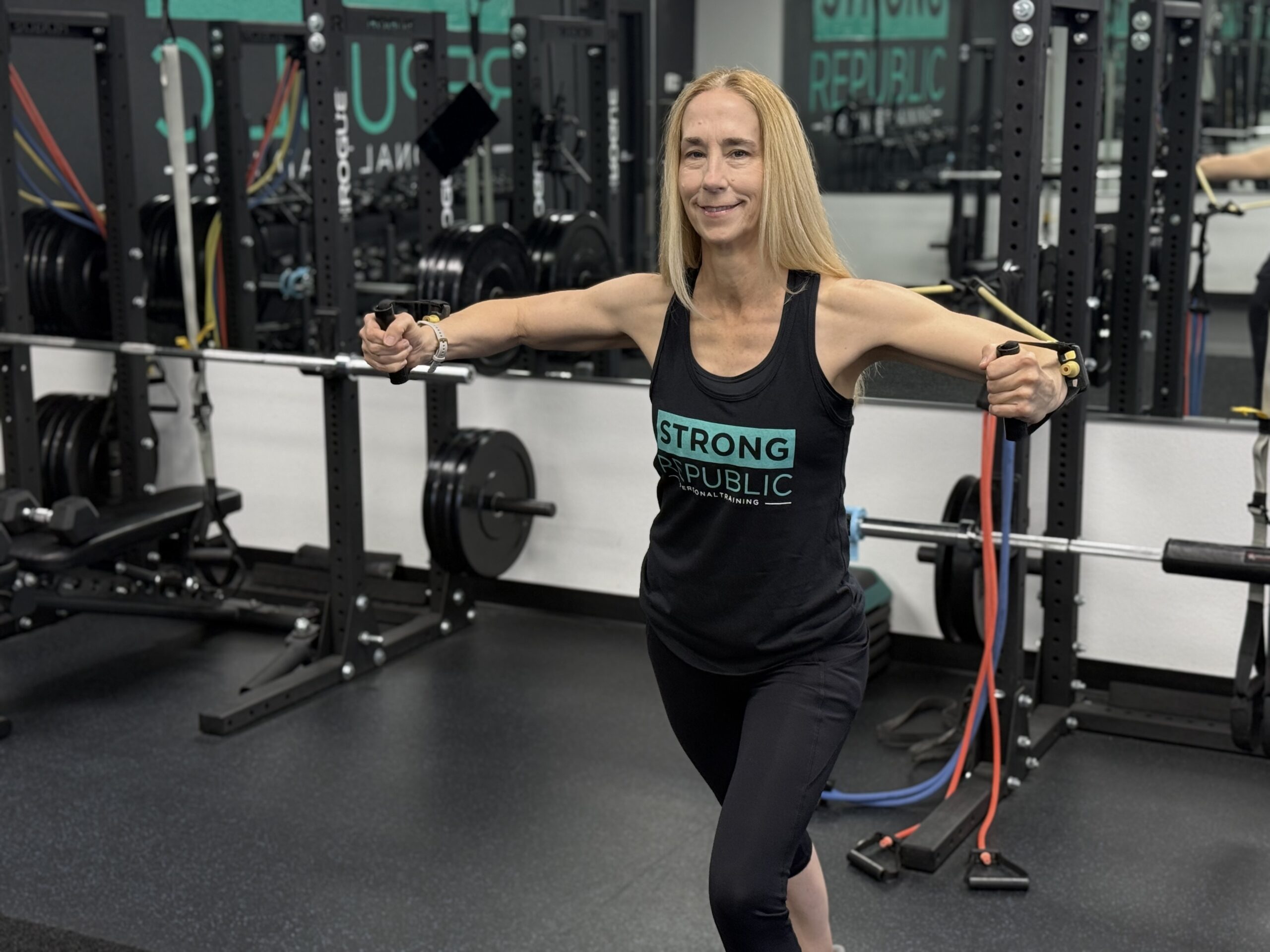
If you do nothing else on this list, do this. Strength training for women over 50 is the single most effective exercise for managing menopause symptoms. It builds new muscle tissue to counteract the accelerated muscle loss caused by estrogen decline. It increases bone density, which is critical since women can lose up to 20% of bone density in the years following menopause. It boosts metabolism by adding metabolically active tissue. It reduces the visceral belly fat that accumulates during menopause. And it improves sleep quality and mood through hormonal regulation.
Aim for 2 to 3 sessions per week focusing on compound movements like squats, deadlifts, rows, presses, and carries. Working with a personal trainer for women who understands menopause-related changes ensures you're training safely and effectively rather than guessing at what's appropriate. If you're looking for the best gyms for women in the Coachella Valley, we have locations in La Quinta, Palm Desert, and Palm Springs.
Walk Every Day
Walking is the most underrated exercise for menopause. It doesn't spike cortisol (which can worsen menopause symptoms), it supports cardiovascular health, improves mood, and helps regulate sleep patterns. The goal is 7,000 to 10,000 steps per day, or about 30 to 45 minutes of intentional walking. Morning walks are especially effective for setting your circadian rhythm and improving sleep, which is one of the most common menopause complaints. Here in the Coachella Valley, getting your walk in before the heat picks up makes early mornings the ideal time.
Balance and Stability Work
Estrogen decline affects proprioception, which is your body's awareness of where it is in space. This is why fall risk increases significantly after menopause. Balance training isn't something to put off until your 70s. It's essential for any woman going through menopause. Key exercises include single-leg stands, tandem walks, single-leg deadlifts, step-ups, and farmer's carries. All of these can be incorporated into your strength training sessions rather than requiring separate workouts. Our guide to 5 balance exercises to prevent falls is a good starting point.
Get a Program Designed for Your Body
Training from just $33/session
Our trainers understand menopause. Fill out the form and we'll build your program.
HIIT in Moderation
Short bursts of intense exercise followed by rest periods can be effective for managing menopause weight gain and improving cardiovascular health. However, too much high-intensity training raises cortisol, which worsens hot flashes and sleep disruption. The sweet spot is 1 to 2 HIIT sessions per week, no longer than 20 to 30 minutes each. Combine this with 2 to 3 strength sessions and daily walking for an optimal menopause fitness program.
Flexibility and Mobility Work
Joint stiffness increases during menopause as estrogen's protective effect on connective tissue declines. Regular stretching and mobility work keeps joints healthy and reduces pain. Use dynamic stretching before workouts and static stretching after. Professional assisted stretch therapy can dramatically improve flexibility and reduce joint discomfort. It's one of the most popular services among women at Strong Republic.
What to Avoid
Excessive cardio is the biggest trap. Long, steady-state sessions of 60+ minutes on the treadmill or elliptical can raise cortisol, accelerate muscle loss, and actually make menopause symptoms worse. Shorter, more intense sessions paired with strength training produce far better results.
The other trap is combining extreme calorie restriction with lots of exercise. Many women respond to menopause weight gain by eating less and moving more. This tanks your metabolism further and accelerates muscle loss, making the problem worse over time. Instead, focus on adequate protein (0.7 to 1.0 grams per pound of body weight) and prioritize strength training. Proper nutrition coaching makes all the difference here.
Menopause Fitness in La Quinta, CA
La Quinta has a large and growing community of women navigating menopause who want real answers — not generic advice that ignores what's happening in their bodies. The desert lifestyle is active, but activity alone doesn't address the muscle loss, bone density decline, and metabolic shifts that menopause brings. That's where a structured program with a knowledgeable trainer makes all the difference.
Our La Quinta studio serves women from La Quinta, Indian Wells, Bermuda Dunes, and the surrounding east valley. Every trainer on our team understands menopause-specific training — what to prioritize, what to modify, and how to build a program that actually addresses the changes your body is going through right now. Small groups. Real coaching. Programs designed for your body, not the average 30-year-old. Call (760) 508-1993 or fill out the form below to get started.
A Weekly Plan That Works
The ideal menopause exercise week looks something like this. Monday: strength training (full body or upper body focus). Tuesday: walking plus light mobility work. Wednesday: strength training (lower body focus). Thursday: walking plus flexibility or stretch therapy. Friday: strength training or a short HIIT session of 20 to 30 minutes. Saturday: walking, hiking, or active recreation. Sunday: rest or gentle mobility. This gives you 3 strength sessions, daily movement, and adequate recovery, which is the formula that works best for women going through menopause.
Our 14-Day Jump Start is a perfect way to get started with this approach. You'll train with certified coaches at our studios in Palm Desert, La Quinta, or Palm Springs who understand menopause and will build your program around where you are right now. You can also check out our weight training vs cardio guide or read what our members say about their results. If weight loss is a goal, we have dedicated guides for women over 50, with local pages for Palm Desert and La Quinta and Palm Springs.