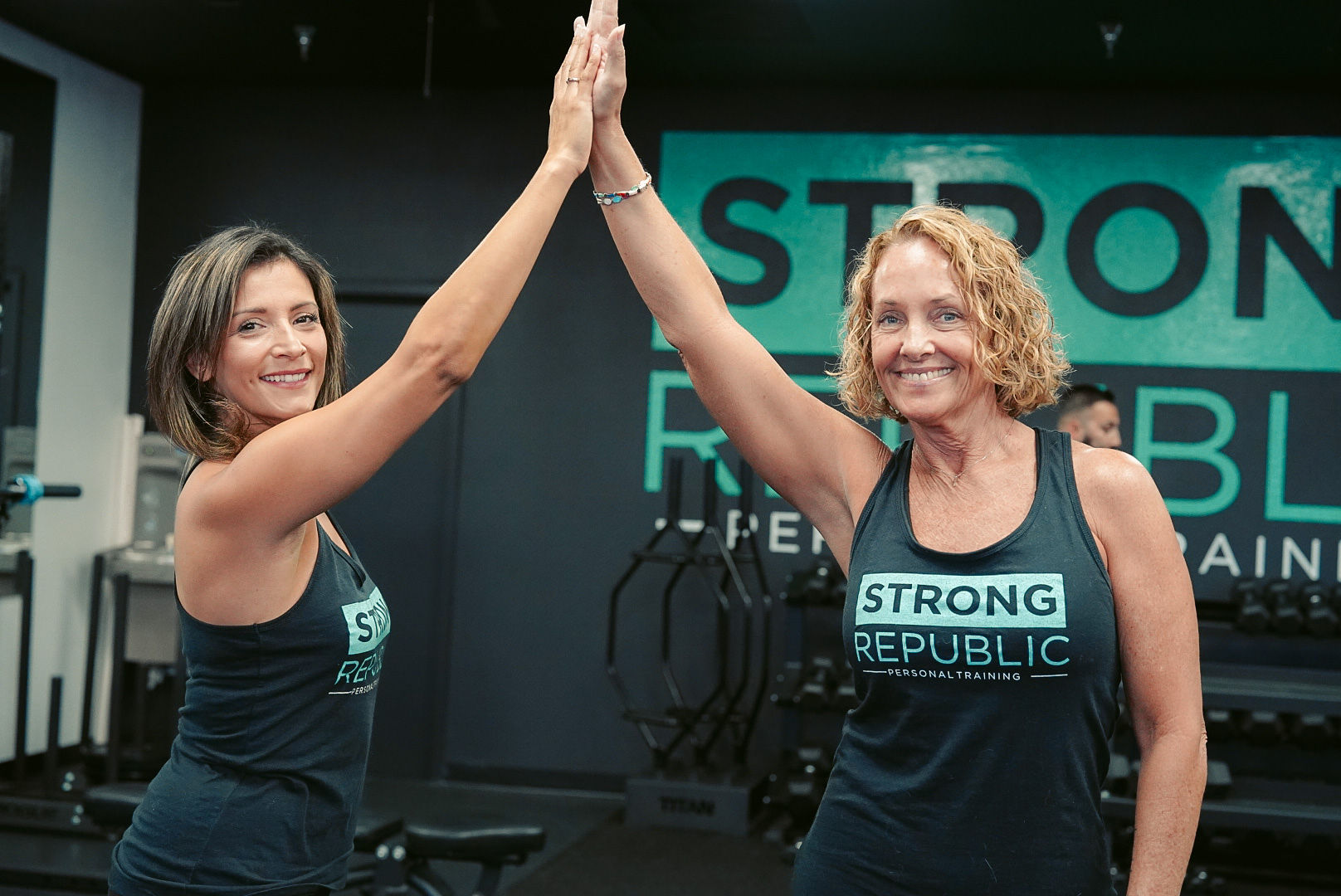
Should women over 50 in La Quinta focus on weight training or cardio? It's one of the most common questions we hear at Strong Republic, and the answer might surprise you. For decades, women were told cardio was the answer to everything. Walk more. Do the elliptical. Take aerobics classes. And cardiovascular exercise does have real benefits for heart health and mood. But if you're a woman over 50 looking to lose weight, build strength, maintain bone density, and manage the changes that come with menopause, the research is overwhelmingly clear: weight training wins.
This isn't just our opinion based on coaching thousands of adults over 40. The science on this has been building for years, and the consensus among researchers and physicians who specialize in aging is that resistance training is the single most important form of exercise for women after 50. Here's why, and what the ideal approach actually looks like.
The Head-to-Head Comparison
Ready to Get Strong with Us?
14-Day Jump Start from $149 · Coached strength training from $36/session
Coaches specializing in women 40+. Serving La Quinta. No contracts.
Weight Training
- Builds new muscle tissue
- Increases bone density
- Boosts metabolism 24-72 hours after workout
- Reduces menopause belly fat
- Improves balance and fall prevention
- Burns calories during AND after exercise
- Preserves muscle during weight loss
- Improves insulin sensitivity
Cardio Only
- Improves cardiovascular health
- Burns calories during exercise
- Reduces blood pressure
- Improves mood short-term
- Does NOT build muscle
- Does NOT increase bone density
- Can increase cortisol (worsens menopause)
- Can accelerate muscle loss if excessive
Why Weight Training Matters More After 50
Here's what happens when women over 50 rely only on cardio: they lose weight on the scale, but much of that weight is muscle - not fat. Less muscle means a slower metabolism, which means the weight comes back (and then some). It's the classic yo-yo cycle, and it gets worse with every round.
Strength training for women over 50 breaks this cycle. When you lift weights, you build muscle while losing fat. Your metabolism increases because muscle tissue is metabolically active, burning calories even while you sleep. Your body composition changes even when the scale doesn't move much. And the results last because you've built the metabolic engine to maintain them.
There's also the menopause factor that most fitness advice completely ignores. After menopause, declining estrogen levels cause a shift in where your body stores fat, moving it toward the abdomen. Excessive cardio can actually raise cortisol levels, which compounds this problem. Weight training has the opposite effect. It helps regulate cortisol, improves insulin sensitivity, and targets the visceral fat that accumulates around the midsection during and after menopause. If you're dealing with menopause-related changes, this distinction matters enormously.
The "Afterburn" Effect
One of weight training's biggest advantages is called excess post-exercise oxygen consumption, or the "afterburn effect." After a strength training session, your body continues burning elevated calories for 24 to 72 hours as it repairs muscle tissue and replenishes energy stores. Cardio burns calories during the workout and then the elevated calorie burn stops almost immediately.
Over the course of a week, this difference adds up significantly. A woman who does three strength training sessions might burn an extra 500 to 800 calories from the afterburn effect alone, on top of what she burned during the actual workouts. Cardio produces no equivalent post-exercise benefit. This is one of the reasons women who switch from cardio-only routines to strength-focused programs often see body composition changes they never achieved with hours on the treadmill. For weight loss specifically, see our weight loss program for women over 50 with location guides for La Quinta and Palm Springs and Palm Desert.
What About Bone Density?
This might be the most important difference for women over 50. Cardio, even weight-bearing cardio like walking, has minimal impact on bone density. Weight training directly stimulates bone growth through mechanical loading. When muscles pull hard against bones during resistance exercises, the stress triggers new bone formation in exactly the areas most vulnerable to fractures: the spine, hips, and wrists. For women at risk of osteoporosis, which includes most women after menopause, this alone makes weight training the clear priority. Our complete guide to strength training for osteoporosis covers this in much more depth.
Learn more about the 7 benefits of strength training after 50 including bone density, brain health, and more.
The Verdict
Weight training should be the foundation. Cardio is a supplement. For women over 50, the ideal ratio is 3 strength sessions per week with daily walking and 1 to 2 moderate cardio sessions.
Ready to Focus on Strength?
If you're a woman over 50 looking to build strength, improve bone density, increase energy, and lose weight sustainably, our Women's Strength Training Programs provide a structured approach designed specifically for adults over 40.
The Best of Both Worlds
The good news is you don't have to choose only one. The most effective approach for fitness for women over 50 combines weight training as the priority with strategic cardio as a supplement. Daily walking is excellent and doesn't interfere with recovery. One or two moderate-intensity cardio sessions per week support heart health. But 3 strength training sessions form the backbone of everything.
At Strong Republic, our semi-private training sessions with up to 6 people incorporate both strength and cardiovascular elements in efficient 45-minute sessions. Our coaching team designs programs that balance these elements specifically for your body and goals. We train at studios in Palm Desert, La Quinta, and Palm Springs, and our 14-Day Jump Start is a great way to experience it firsthand. You can also read what our members say about their results. Find the best gym for women in La Quinta, Palm Desert, Palm Springs, or see our Coachella Valley guide. Also read our nutrition tips over 40.
Women's Fitness Over 50 in La Quinta, CA
La Quinta has a vibrant community of women over 50 who are active, motivated, and done with fitness programs that don't deliver results. Whether you're a year-round resident or spend winters in the desert, the question is the same: what exercise approach actually works for your body right now?
Our La Quinta studio on Highway 111 is built exclusively for adults 40 and up. Our coaching team understands the unique challenges women face after 50, from hormonal changes to bone density concerns to metabolism shifts, and builds your program around all of it. Women throughout La Quinta, Indian Wells, Bermuda Dunes, and surrounding communities train here every week and see the kind of results that cardio alone never produced. Call (760) 509-1993 or fill out the form below to get started.
Ready To Get Strong?
Fill out the form below and we'll contact you within 24 hours to schedule your first session